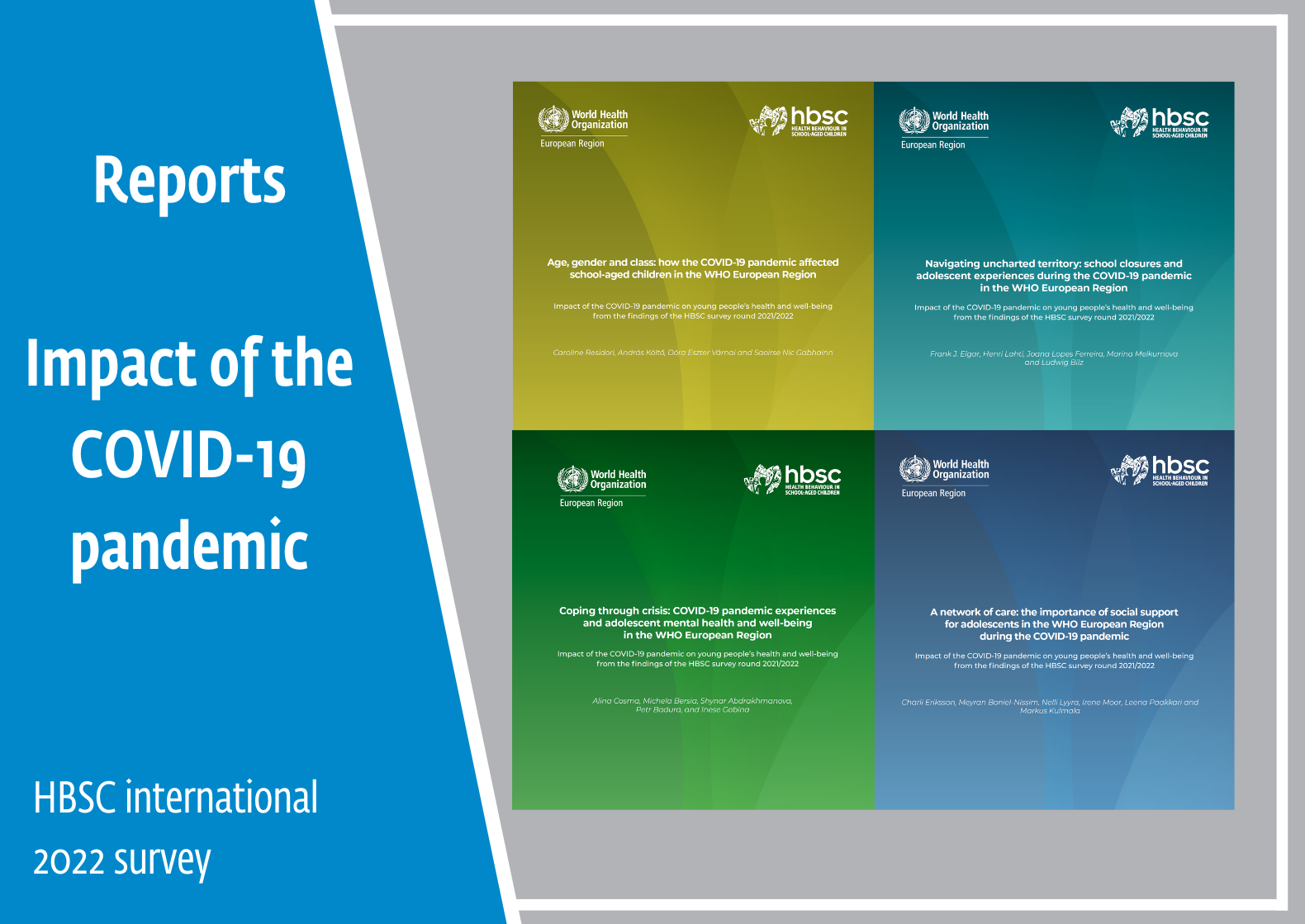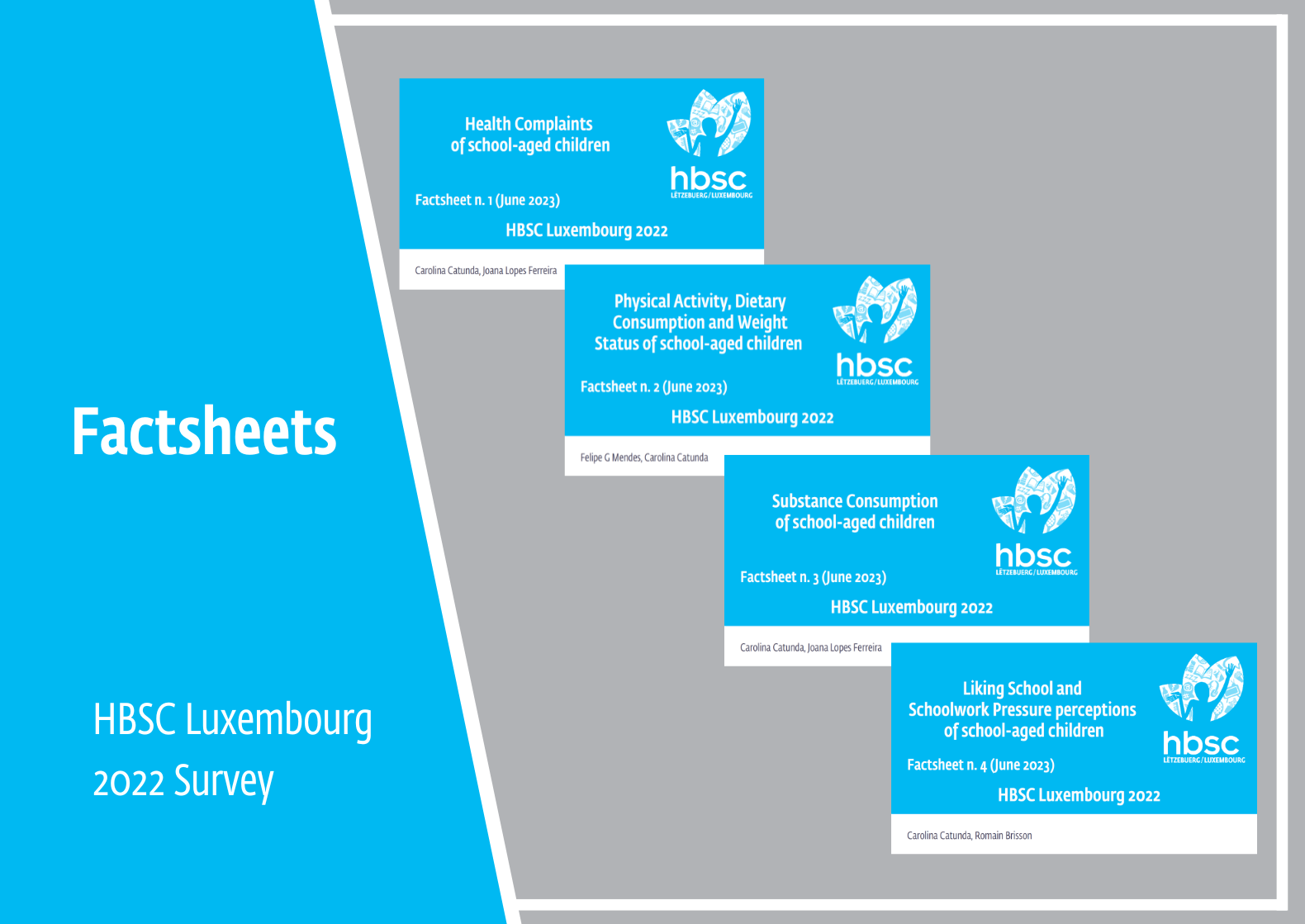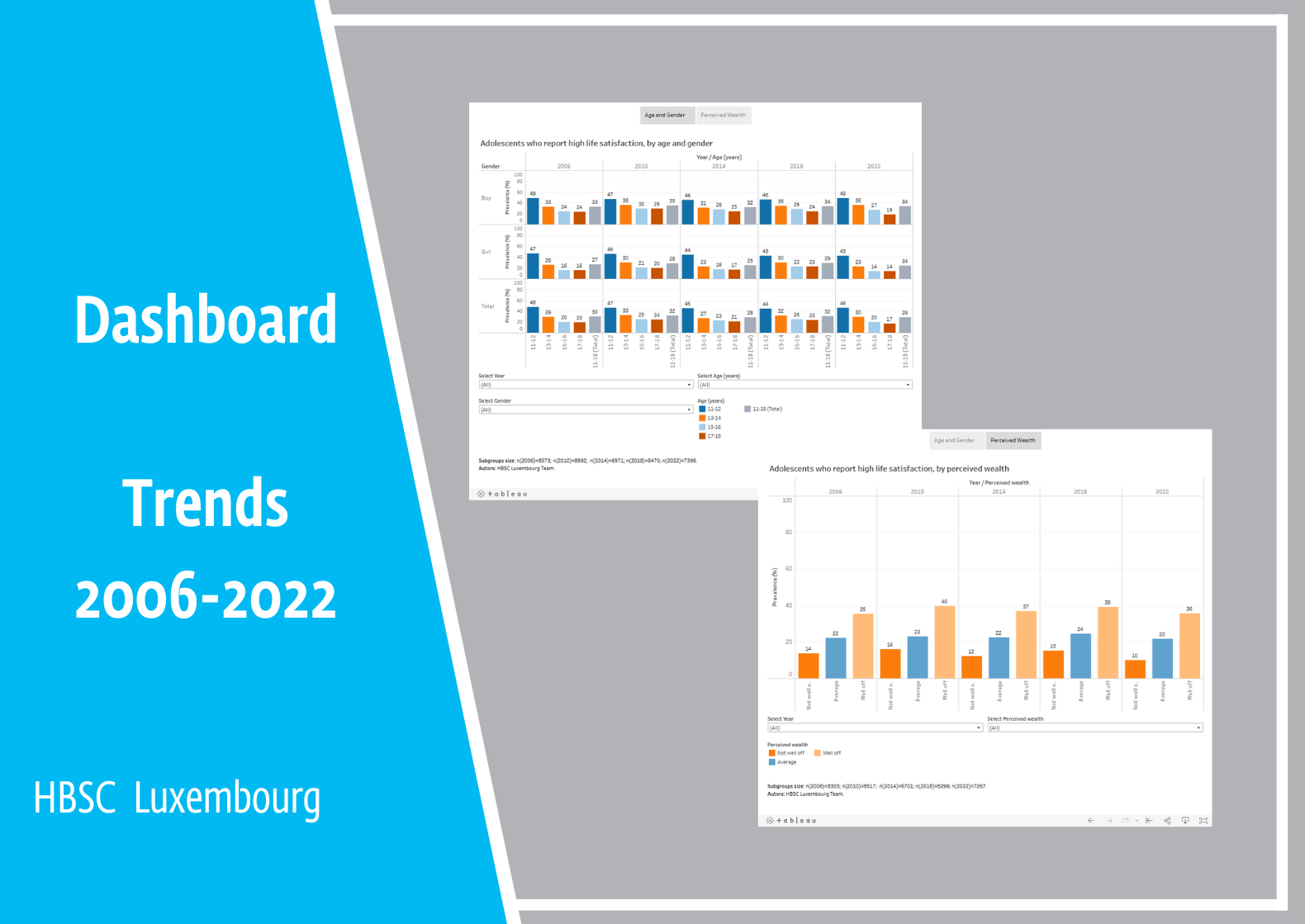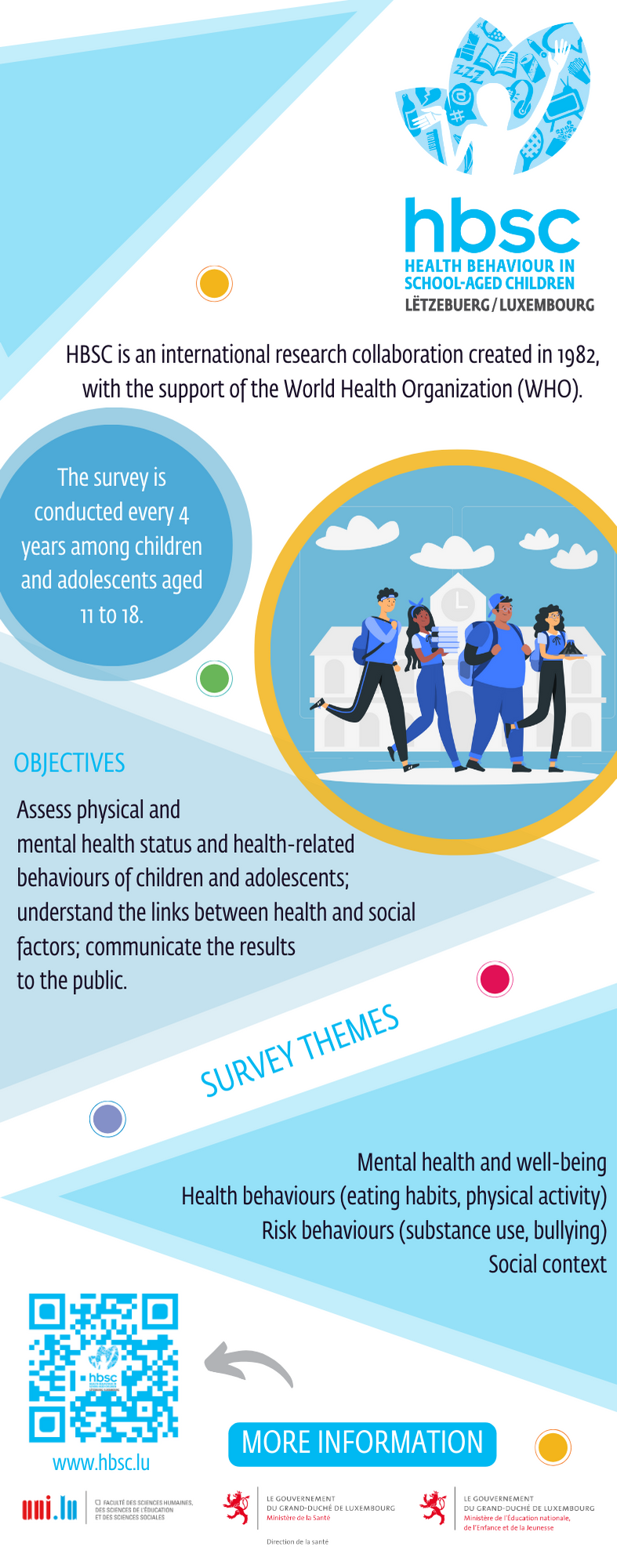

The Health Behaviour in School-aged Children (HBSC) study is an international research collaboration initiated in 1982 to examine health behaviours among (school-aged) children and adolescents, in partnership with the World Health Organization (WHO).
Since then, the number of participating countries has increased and now the survey includes 51 countries and regions from Europe, North America and Asia. Luxembourg conducted a pilot survey in 1999 and has participated regularly in the HBSC survey since 2006.
The survey is conducted every 4 years with students between the age of 11 and 18 years old and focuses on topics such as health, health-related behaviours and environmental conditions. The most recent HBSC survey wave will take place 2026.
The data are collected and analysed in collaboration with the Ministère de l’Éducation nationale, de l’Enfance et de la Jeunesse, the Ministère de la Santé et de la Sécurité sociale / Direction de la santé, the Youth Research group of the University of Luxembourg and the HBSC Research Network.
The 2026 HBSC survey will build on the 2022 HBSC survey, keeping most questions allowing for comparison over time, while adding the following new items:
– Organised leisure-time activities: including team sports (e.g. football, volleyball), individual sports, artistic activities, clubs and religious activities.
– Unstructured leisure-time activities: involve reading books, playing an instrument, sleeping, meeting friends.
– Sedentary habits: refers to sitting for long periods.
– Disability and chronic conditions: assessing long-term health conditions, its relationship to health and well-being, and its impact on daily functioning.
These added items build on key 2022 findings related to physical activity, mental health, and social and school environment. For instance, evidence from the HBSC 2022 study shows that regular physical activity in youth is associated with reduced risk of obesity and related diseases, and improved mental health. While the risks of insufficient physical activity have been well documented in Luxembourg, little is known about the sedentary behavior.
In addition, organised and unstructured leisure activities will help clarify how adolescents spend their free time. Participation in organised activities is associated with better school achievements, lower substance uses and antisocial behavior, and higher well-being. However, these associations vary by context and type of activity, and are yet to be documented in Luxembourg, highlighting the need for its investigation.
Chronic or long-term health conditions can affect students’ regular functioning and participation in school life. This subjective measure allows students to report their perception of having a long-term condition, disability, or medical condition. It also allows to identify whether the condition requires medication or interferes with their school experience.
As behaviors established during adolescence tend to remain during adulthood, these areas of research are of particular importance, as they have not yet been explored in Luxembourg.
Latest publications